How to get rid of moles in your lawn
Trap them. Every university extension service that has tested mole control names trapping as the method that works. Killing grubs, the most common advice, usually does not.
- 1. Do this
- Trap on a fresh, straight run
- 2. If you will not trap
- Worm-shaped bait in active runs
- 3. To protect one area
- Castor oil, repeated
- Skip
- Grub killer, gum, sonic spikes
Best seasons: spring and fall, after rain. Check your state's wildlife rules before you trap.
First, make sure it is a mole
Three animals get blamed for the same damage. Pick what you see.
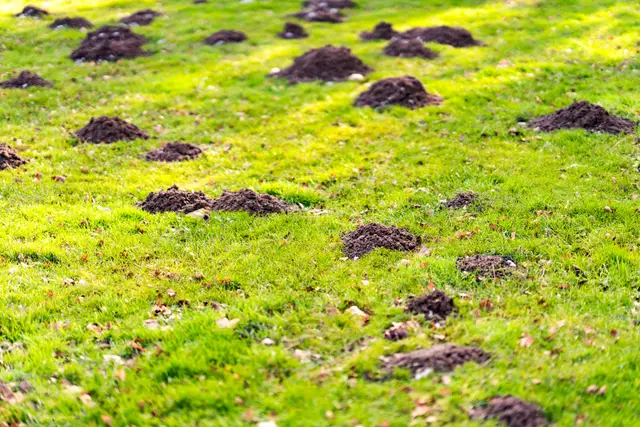
That is a mole. Raised ridges are surface tunnels, and Missouri Extension says they are unique to moles. Molehills are cone-shaped, few in number and made of coarse, cloddy soil pushed up from a deep run. Moles eat worms and insects, not your plants. Keep reading.
That is probably a pocket gopher. Gophers make many more mounds than moles, each of finely sifted soil, about half a gallon at a time, and leave no raised ridges. Their tunnels run 5 to 8 inches deep or more, and mole traps usually do not catch them. You need gopher traps and a different method.
That is probably a vole. Voles are small rodents that eat vegetation and can damage plants; moles do not eat plants at all. Voles and shrews also travel through old mole tunnels, so you can have both. Mole traps and mole baits are not made for voles.
Every method, and what the evidence says
| Method | Verdict | What extension research says | Source |
|---|---|---|---|
| Trapping | Works best | Named the most effective and practical method by every extension service we read. Takes patience and correct placement. | U. of Missouri, Ohio State University, Iowa State University, K-State, U. of Minnesota |
| Worm-shaped baits (bromethalin) | May work | Made to imitate an earthworm and dropped into active runs. Missouri notes there is little research comparing them with trapping. Keep them away from pets and children and follow the label. | U. of Missouri |
| Grain, seed or peanut baits | Rarely work | Moles eat worms and grubs, not seeds or nuts, so they ignore these. | U. of Missouri, K-State |
| Castor oil repellents | Inconsistent | Can push moles out of a treated area for a time. Needs repeating, and the moles may simply move next door or to the other half of the lawn. | Michigan State University, U. of Missouri, Ohio State University |
| Grub killer | Does not solve it | Earthworms are the main food and grub products do not affect them. Worth doing only if you find grubs when you dig. | Iowa State University, Purdue, K-State |
| Drier, firmer soil | Helps a little | Missouri says rolling the soil or cutting back on watering can make a lawn less inviting. | U. of Missouri |
| Buried barrier | Works for small beds | Sheet metal or hardware cloth buried 24 to 30 inches with 6 inches above ground. Practical around a seedbed or flower bed, not a whole lawn. | Nebraska |
| Gas and smoke cartridges | Not recommended | Tunnel systems are too long and leaky for gas to build up. | U. of Missouri |
| Gum, mothballs, sonic spikes, mole plants | No evidence | No research supports them. | U. of Missouri, Michigan State University |
How to trap a mole
These steps follow University of Missouri Extension's guide. Trapping fails mostly because the trap is on the wrong run, so step 1 matters most.
- Find a run in use. Look for a straight ridge with fresh digging, often along a fence, a path or the edge of a bed. Avoid the twisting ridges out in the open and avoid the mounds: twisting runs are feeding tunnels a mole may not use again.
- Choose a trap. Three kinds are recommended: harpoon (spikes), scissor-jaw and choker loop. All fire when the mole pushes up against a pan resting on a flattened section of tunnel.
- Prepare the spot. Open a short section of the tunnel, put the soil back loosely, and pack it firmly where the trigger pan will sit.
- Set it. Harpoon: straddle the run with the pan just touching the packed soil. Scissor-jaw: straddle the run with the jaws about 1 inch below the surface. Choker: dig a hole the width of the trap and slightly deeper than the tunnel, loop the trap around the run, then cover it so no light gets in.
- Check it daily, and move it after two days. No catch in two days means the mole has changed its route, the run was disturbed too much, or it sensed the trap. Try another fresh, straight run.
- Keep going after a catch. Leave a trap set for a few more days. Other moles move into empty tunnels.
Safety and law. Mole traps have strong springs: follow the maker's instructions, mark each trap and keep children and pets away. Trapping rules differ by state, so check with your state wildlife agency first.
If you would sooner not kill it
Missouri Extension describes live capture: in the early morning or evening, when you can see a ridge being raised, strike a spade into the ridge behind the mole and lift it out; or bury a large can or wide-mouth jar in the path of a run and cover the opening with a board. It is slow work. A castor oil repellent is the other option, with the limits shown in the table. Missouri also makes the case for tolerance: a mole airs the soil and eats grubs, so a single mole in a far corner may not need removing.
Why you have moles
Good soil. Missouri says moles prefer moist, sandy loam, exactly what a watered lawn offers, and they eat 70 to 80 percent of their body weight a day, mostly earthworms and white grubs. A healthy lawn full of worms attracts them, which is why "get rid of the food" does not work: you would have to get rid of the earthworms, and Iowa State calls that neither practical nor prudent.
Moles tunnel all year. You see the most ridges in the warm, wet months of spring and fall. In winter they use deep, permanent tunnels with nest chambers. One litter of two to five young is born between March and May.
Repair the lawn afterwards
- Press the ridges down. Tread or roll them flat so the roots touch soil again, then water. Grass over a fresh ridge often recovers if it is pressed down before it dries out.
- Spread out the molehills. Rake the loose soil across the lawn, or shovel it away if it is stony.
- Fill and reseed bare strips. Top up sunken runs with soil and seed them. The topsoil calculator and grass seed calculator give the amounts.
Questions people ask
What is the fastest way to get rid of moles in a lawn?
Trapping. University extension services in Missouri, Ohio, Iowa, Kansas, Indiana, Minnesota and Florida all name it as the most effective method. Set a mole trap on a straight, freshly dug surface run. If it has caught nothing after two days, move it to another run.
Will killing grubs get rid of moles?
Usually not. Earthworms are the main food, and grub killers do not touch earthworms. Iowa State says having moles does not mean you have grubs, and Purdue calls the grub explanation an old wives' tale. Treat for grubs only if you dig and find grubs, and for the lawn's sake.
Does castor oil get rid of moles?
Sometimes, for a while. Michigan State calls results inconsistent, Missouri says it may prevent damage under certain circumstances, and Ohio State found it of little value. It has to be reapplied, and it moves moles along more than it removes them.
Do sonic spikes, chewing gum, mothballs or mole plants work?
No evidence says they do. Missouri Extension lists chewing gum, castor bean and "mole plants", windmills and electromagnetic devices as unproven, and Michigan State rates mothballs as not effective or inconsistent.
How many moles are in my yard?
Fewer than the damage suggests. One mole digs a lot of tunnel, and moles live alone outside the spring breeding season. A typical home lawn with fresh ridges is often dealing with one to a few animals.
Will moles go away on their own?
Not reliably. Moles are active all year. Surface ridges fade in winter, when moles use their deep tunnels, and return in spring. If you remove a mole, another can move into the empty tunnels later.
Do moles eat grass roots, bulbs or plants?
No. Moles eat earthworms, grubs and other soil animals. Iowa State states plainly that they do not eat bulbs or roots. The lawn damage comes from roots being lifted and drying out above the tunnels. Chewed bulbs, bark and stems point to voles.
When is the best time to trap moles?
Spring and fall, especially after rain, when moles are working close to the surface. In summer heat and in winter they use deeper tunnels and are harder to catch.
Next on your lawn
Sources
- University of Missouri Extension, Controlling Nuisance Moles (G9440)
- Ohio State University Extension, Effective Mole Control (W-11-2002)
- Iowa State University Extension, Moles in the Lawn, Control
- Purdue Plant and Pest Diagnostic Lab, How do I get rid of moles in my lawn?
- K-State Research and Extension, Moles on the move: Traps are most effective control method
- Michigan State University Extension, Moles
- Nebraska Extension, Moles and pocket gophers publication
- University of Minnesota Extension, How to get rid of moles in your yard